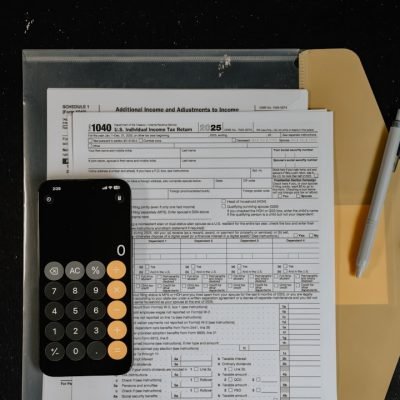

Hey fellow gig workers! Let’s be real: our phones are our lifelines. Whether you’re an Uber driver navigating rush hour, a DoorDash delivery pro finding the fastest route, an Etsy seller responding to customer queries, or a freelance graphic designer coordinating projects, your smartphone isn’t just for scrolling TikTok—it’s your mobile office. So, it makes total sense to wonder: can I deduct my phone bill as a gig worker?
The short answer, my friends, is a resounding YES! But like most things with the IRS, it’s not as simple as just writing off the whole thing. In my years hustling through various gig apps and freelancing projects, I’ve learned that understanding these nuances can literally save you hundreds, if not thousands, of dollars come tax time. For 2026, getting this right means more money in your pocket and less stress from Uncle Sam. Let’s dive into how to make sure you’re deducting your phone bill the smart, IRS-compliant way.
Key Takeaways for Phone Bill Deductions
- Yes, you can deduct it! Your phone is a legitimate business expense for gig work.
- Only the business portion is deductible. You must separate personal from business use.
- Track everything diligently. Keep detailed records of business calls, data usage, and app usage.
- Prorate wisely. If 70% of your usage is for business, you can deduct 70% of your bill.
- One phone vs. two: Having a dedicated business phone simplifies tracking but isn’t required.
- This applies to Schedule C filers. Most gig workers fall into this category.
The Gig Worker’s Mobile Office: Why Your Phone Bill is Deductible
Think about it. Without your phone, how would you accept rides, find customers, list products, or communicate with clients? Your smartphone is arguably your most critical tool. The IRS recognizes that legitimate business expenses are deductible, and for us gig workers, a phone bill absolutely qualifies as a necessary and ordinary expense. “Ordinary” means it’s common and accepted in your industry (and trust me, every gig worker uses a phone!). “Necessary” means it’s helpful and appropriate for your business.
This deduction falls under the umbrella of “other expenses” on your IRS Schedule C (Form 1040), which is the form most self-employed individuals and gig workers use to report their income and expenses. If you’re earning income through apps like Uber, Lyft, DoorDash, Instacart, Grubhub, Etsy, Fiverr, or Upwork, you’re likely filing a Schedule C.
The Golden Rule: Business Use vs. Personal Use
Here’s the thing, and honestly, this is where most gig workers get tripped up: you can only deduct the business portion of your phone bill. The IRS isn’t going to let you write off the hours you spent binging Netflix or scrolling through Instagram looking at cat memes, even if you did it between DoorDash deliveries. Sound familiar?
This means you need a system to differentiate. For example, if your total phone bill is $100, and you determine 60% of its use is for your gig work, you can deduct $60. The key is having a reasonable and defensible method for arriving at that percentage. Don’t just pull a number out of thin air!
How to Calculate Your Business Use Percentage (And Make it Stick)
Calculating your business use percentage might sound daunting, but it’s totally doable. The goal is to establish a consistent, logical method that you can explain if the IRS ever comes knocking. Trust me, it’s better to be prepared.
1. The “Two Phones” Method (The Easiest, But Not Always Practical)
In my experience, if you’re serious about maximizing deductions and simplifying your life, having a dedicated business phone is a dream. If you have one phone strictly for your Uber runs or Etsy shop, and another for personal use, then 100% of the business phone’s bill is deductible. No proration needed! This is the cleanest method, but I know it’s not financially feasible for everyone.
2. The “One Phone” Method (Most Common, Requires Tracking)
This is where most of us live. You use your single smartphone for everything. Here’s how to figure out your business percentage:
- Call Logs: Go through your phone bill’s detailed call logs. Count the number of business calls vs. personal calls. This can be tedious, but it gives you a solid percentage for your voice plan.
- Data Usage: This is often the biggest chunk of our bills. Check your phone’s settings (or your carrier’s app) to see which apps are consuming the most data. If your DoorDash app, navigation, or client communication apps are high, you have a strong case. You can often see data usage per app.
- Time Tracking: Estimate the percentage of time you spend using your phone for business purposes. This is more subjective but can be a supporting factor. For instance, if you’re actively driving for Uber 40 hours a week and using your phone constantly for navigation, accepting rides, and communicating with passengers, that’s a significant chunk.
Example: Let’s say your monthly phone bill is $80.
- You review your detailed bill and estimate that 70% of your calls are business-related.
- Your phone’s app usage shows that Uber/Lyft/DoorDash, Google Maps, and client communication tools account for 65% of your data.
- You consistently work 30-40 hours a week, and your phone is integral to that work.
You could reasonably justify a 65-70% business use percentage. Let’s go with 65%.
Your deductible amount would be $80 x 0.65 = $52 per month. Over a year, that’s $624! That’s real money, folks.
IRS Publication 535, Business Expenses, confirms that expenses for a “cellular telephone or other similar telecommunications equipment” are deductible for the business portion. It also emphasizes the importance of keeping adequate records to prove your business use.
What About the Phone Itself?
Ah, the phone itself! If you bought a new phone specifically for your gig work, or if your existing phone is primarily (more than 50%) used for business, you might be able to deduct its cost. This is generally done through depreciation, or you might be able to expense the full cost in the year you buy it under Section 179 or bonus depreciation rules. Consult a tax pro for specifics here, but just know it’s another potential write-off if your phone is truly a business asset. Remember, just like the bill, only the business portion of the phone’s cost is deductible.
Record-Keeping: Your Best Friend Against an Audit
I can’t stress this enough: documentation is everything. The IRS loves proof. For your phone bill deduction, you should keep:
- Monthly phone bills: Digital or physical. These show the total cost.
- Usage logs: Screenshots from your carrier app showing data usage by app, or detailed call logs if you’re using that method.
- A simple log: A spreadsheet or even a notebook where you briefly note down your business percentage calculation method and any changes.
- Proof of income: Your 1099-NEC or 1099-K forms from platforms like Uber, Etsy, etc., clearly show your gig work activity.
Seriously, make this a habit. I use a simple spreadsheet to track my monthly phone bill and my estimated business percentage, with notes on *how* I arrived at that percentage. It takes five minutes but saves a huge headache later.
Related Deductions You Shouldn’t Miss
While we’re talking about phone bills, let’s connect this to other crucial deductions. Your phone bill is just one piece of the puzzle!
| Deduction Category | What It Covers | How It Connects to Your Phone Bill |
|---|---|---|
| Internet Bill | A portion of your home internet if you do administrative work (client communication, invoicing, listing products, scheduling) from home. | Often bundled with phone services or a separate utility. You’ll apply the same business-use percentage concept. |
| Mileage Tracking | Driving expenses for business (trips, deliveries, client meetings). For 2026, the standard mileage rate is projected to be around 68 cents per mile (subject to IRS adjustment). | Your phone’s GPS and mileage tracking apps (like Stride, Everlance) are essential here. Your phone *enables* this deduction. |
| Home Office Deduction | If you use a portion of your home exclusively and regularly for your gig work. | Your phone is part of your home office setup. If you deduct a percentage of rent/utilities, your phone bill is another utility that can be partially deducted. |
| Software/App Subscriptions | Any |