
Every few months someone declares WordPress dead. In late 2026 the numbers give them fresh ammunition. W3Techs shows WordPress on roughly 38.4% of all websites, down from the mid-40s earlier in the year, while the “no detected CMS” category has grown. That growth includes static sites, AI-generated pages, and custom builds. Yet among sites that actually use a known CMS, WordPress still holds around 57%. For agencies, the more useful question is not “is WordPress dying?” It is “is it still the best default for the client work we actually sell?”
My answer, after years of shipping both WordPress and Laravel projects for clients, is yes for the majority of business websites. Not because it is perfect. Because the alternatives usually create more long-term friction for the client and the agency than they remove.
The Market Reality Agencies Should Actually Care About
Market-share headlines are easy to misread. The drop in overall percentage is real, but most of the lost share did not migrate to Shopify or Wix in a dramatic way. A large portion went into sites with no detectable CMS. That includes AI-built landing pages, static generators, and custom front ends. For a typical agency client who needs a content-managed site they can update, own, and extend, those alternatives are not automatic upgrades.
- WordPress remains the dominant known CMS by a wide margin.
- Clients rarely demand a switch; most agencies report that the idea of leaving WordPress comes up rarely.
- The ecosystem of hosts, plugins, developers, and maintenance options is still unmatched for ordinary business sites.
If your agency mostly builds brochure sites, service sites, content-heavy marketing sites, or WooCommerce stores, those facts still matter more than the percentage points that moved to “none.”
Why WordPress Continues to Win for Most Client Projects
The practical advantages have not disappeared. Clients own their site. They can move hosts, hire another developer, or keep updating content without negotiating with a proprietary platform. The plugin ecosystem covers membership, booking, forms, SEO, and e-commerce without forcing a full custom build. Performance and security problems are real, but they are almost always the result of too many plugins, poor hosting, or neglected updates, not the platform itself.
AI has made clean WordPress builds faster. Agents and coding assistants can generate custom blocks, write plugin glue code, and handle repetitive theme work. The human still decides architecture, reviews output, and owns the final result. That combination is powerful for fixed-price client work. I have covered the realistic workload reduction side of this in detail in How AI Automation Can Realistically Reduce Agency Workload Without Lowering Quality and the tools that actually pay for themselves in What AI Tools Are Actually Worth Paying For in a Web Development Agency (2026).
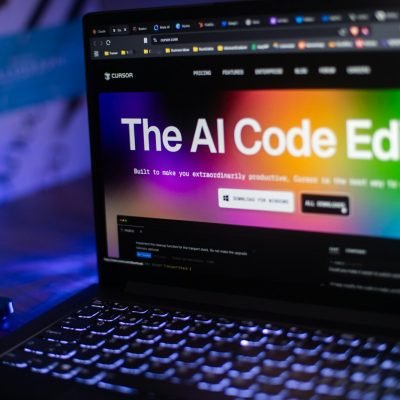
There is also an interesting counter-trend: some AI agents default to plain HTML or React when left to choose freely. Smart agencies are turning that into an advantage by using WordPress where editorial control and ownership matter, then layering AI on top. More on that here: Why AI Agents Skip WordPress in 2026 — And How Smart Agencies Are Turning It Into an Advantage.
When WordPress Is Not the Best Choice
Honesty requires clear boundaries. WordPress is a poor default for complex custom applications with heavy business logic, multi-tenant SaaS features, or strict performance and scalability requirements that go beyond what a well-tuned site needs. In those cases Laravel is usually the better foundation. It gives cleaner architecture, stronger conventions, and easier long-term maintainability for true application work. I reach for Laravel when the project is more product than website.
For pure marketing landing pages or sites that almost never change content, an AI website builder or a static generator can be faster and cheaper. The trade-off is reduced client ownership and harder handoff later. Many agencies now keep both options in the toolkit instead of forcing everything onto one stack.
Projects also fail after launch for reasons that have little to do with the CMS. Scope creep, unclear ownership, neglected maintenance, and poor communication kill more sites than the underlying technology. I wrote about the non-technical causes in Why Most Websites Fail: The Truth About Website Design And Development Services.
How Agencies Should Decide in 2026
Start with the client’s real needs rather than your preferred stack. Ask whether they need ongoing content editing, a large plugin ecosystem, or full ownership. If the answer is yes for any of those, WordPress is still the lowest-friction choice for most agencies. Use AI to accelerate the build, keep the plugin list short, choose solid hosting, and sell a proper care plan. That combination protects margins and client results.
Reserve Laravel (or other frameworks) for application-style projects. Offer lighter AI or static options when the client only needs a simple marketing site and is comfortable with the limitations. The agencies that stay profitable are the ones that match the tool to the job instead of defending a single platform.
Quick Decision Guide
| Project Type | Recommended Default | Why |
|---|---|---|
| Business brochure / service site with content updates | WordPress | Ownership, ecosystem, client handoff |
| WooCommerce store | WordPress | Mature extensions and known patterns |
| Complex custom application or SaaS features | Laravel | Architecture and maintainability |
| Simple one-off marketing landing page | AI builder or static | Speed and lower ongoing cost |
Final Take
WordPress is not the automatic winner for every project in 2026, and pretending otherwise is lazy. But for the bulk of client websites agencies actually deliver, it remains the best practical choice. The market-share dip reflects the rise of new ways to ship simple sites, not a collapse of the platform’s value for content-managed business work. Pair it with disciplined development practices and selective AI use, and it continues to support profitable, maintainable client relationships.
The agencies that struggle are usually the ones treating technology as identity instead of as a tool. Choose deliberately, deliver cleanly, and own the outcome. That approach works regardless of which stack you pick on any given project.
Sources: W3Techs usage statistics (November 2026), industry reports on WordPress agencies and AI adoption, and direct project experience across client work.