
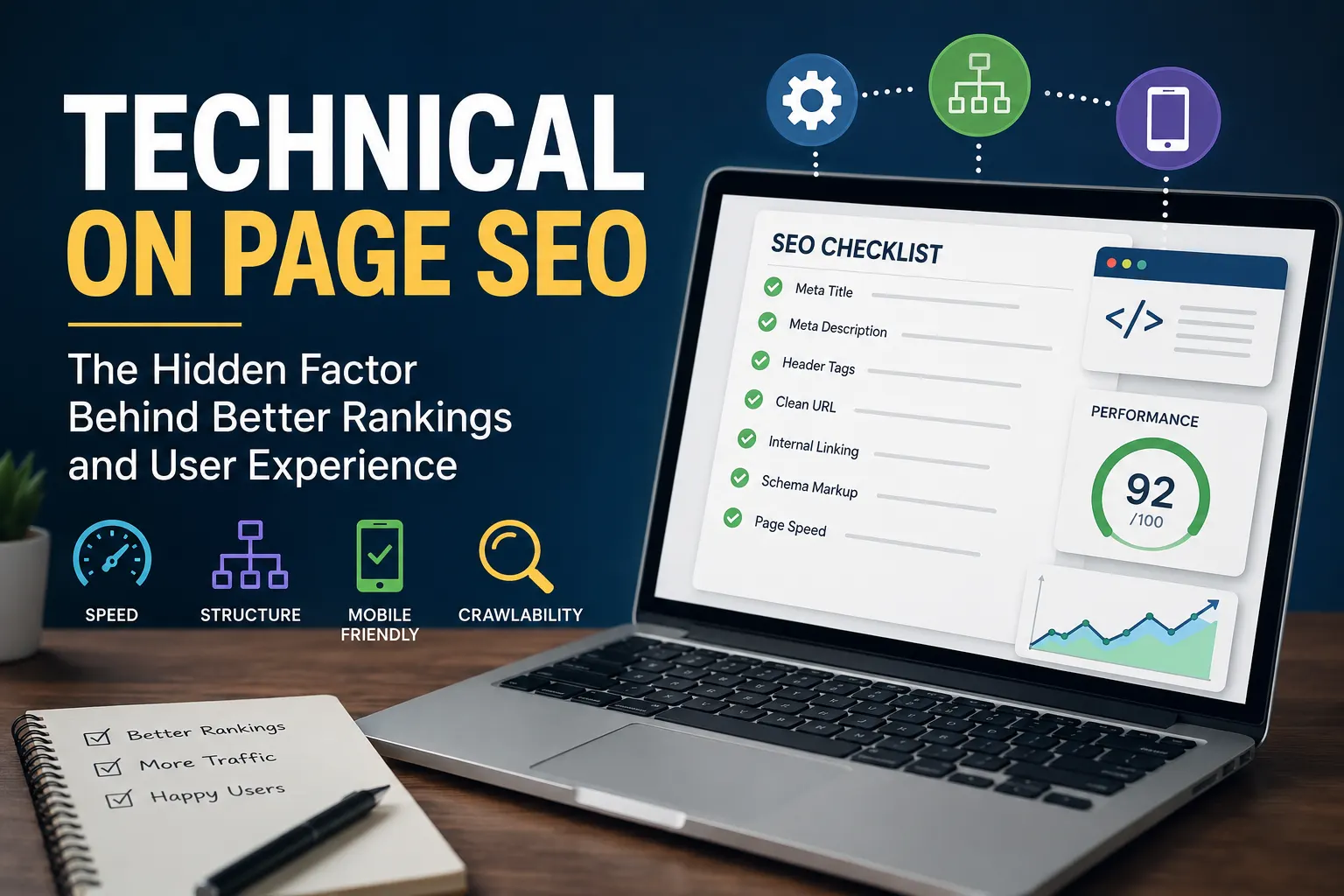
Why Your Technical On Page SEO Strategy Needs a Human Reality Check
Think about the last time you left a website out of sheer frustration. Maybe a page took forever to load, or the layout shifted right as you were about to click a link. We have all been there, and it is incredibly annoying.
When we talk about technical on page seo, it is easy to get buried under a mountain of code, spreadsheets, and complex metrics. We start looking at our websites like machines rather than places where actual people come to read, learn, or buy things.
With the sudden explosion of content generated by ai, it feels like everyone is trying to optimize exclusively for bots. But when it comes to the classic debate of ai vs human preferences, search engines are shifting. They want to reward sites that feel good to use.
The Trap of Optimizing Only for Bots
A friend of mine spent three weeks perfectly mapping out his site schema and optimizing every single image tag. Yet, his traffic kept dropping. Why? Because the actual content was boring and the site navigation felt like a maze.
He treated technical on page seo like a rigid checklist instead of a user experience framework. If your site structure confuses a human, it is probably going to confuse Google’s crawlers too.
Search engines look at how real people interact with your pages. You can find deep insights on how these crawlers view your site by checking the official Google Search Central documentation, which heavily stresses user experience. If users bounce immediately because your layout is a mess, all that perfect backend coding goes to waste.
Common Pitfalls That Quietly Tank Your Rankings
Sometimes the biggest mistakes are the ones we completely overlook because we are focusing on the wrong things. Here are a few common slip-ups that happen when you lose sight of the human element:
-
Ignoring mobile responsiveness because it looks fine on your desktop monitor.
-
Creating messy, confusing URL structures that look like random strings of numbers.
-
Over-indexing thin, useless utility pages that offer zero value to readers.
How often do you check your site on an actual phone instead of just resizing your browser window? It is a small habit, but it catches massive errors before your visitors do.
Striking the Balance Between Automation and Authenticity
The rise of software powered by ai makes it incredibly easy to audit a site in seconds. These platforms spit out hundreds of warnings that look terrifying.
But here is the thing: a software program cannot tell you if your internal linking strategy actually makes logical sense to a reader. It cannot feel the frustration of a broken design.
Clean code matters, and resources like the Mozilla Developer Network offer great foundations for building fast, clean layouts. However, code is just the vehicle. The destination still needs to be built for a person. Prioritize fixing the errors that directly hurt the user experience first, rather than chasing a perfect score on an automated tool.
Practical Steps to Fix Your Foundations Today
Don’t panic and try to overhaul everything overnight. Start small. Fix your broken links, clean up your messy redirects, and make sure your text is actually readable against your background color.
When you master the essentials of technical on page seo, the rest usually falls into place naturally. You build a fast, clean, accessible website, and the search engines will naturally want to share it.
At the end of the day, optimization isn’t a dark art. It is just digital hospitality. Make your site a pleasant place to visit, and the algorithms will take care of themselves. What is one technical tweak you have been putting off that you can fix right now?