
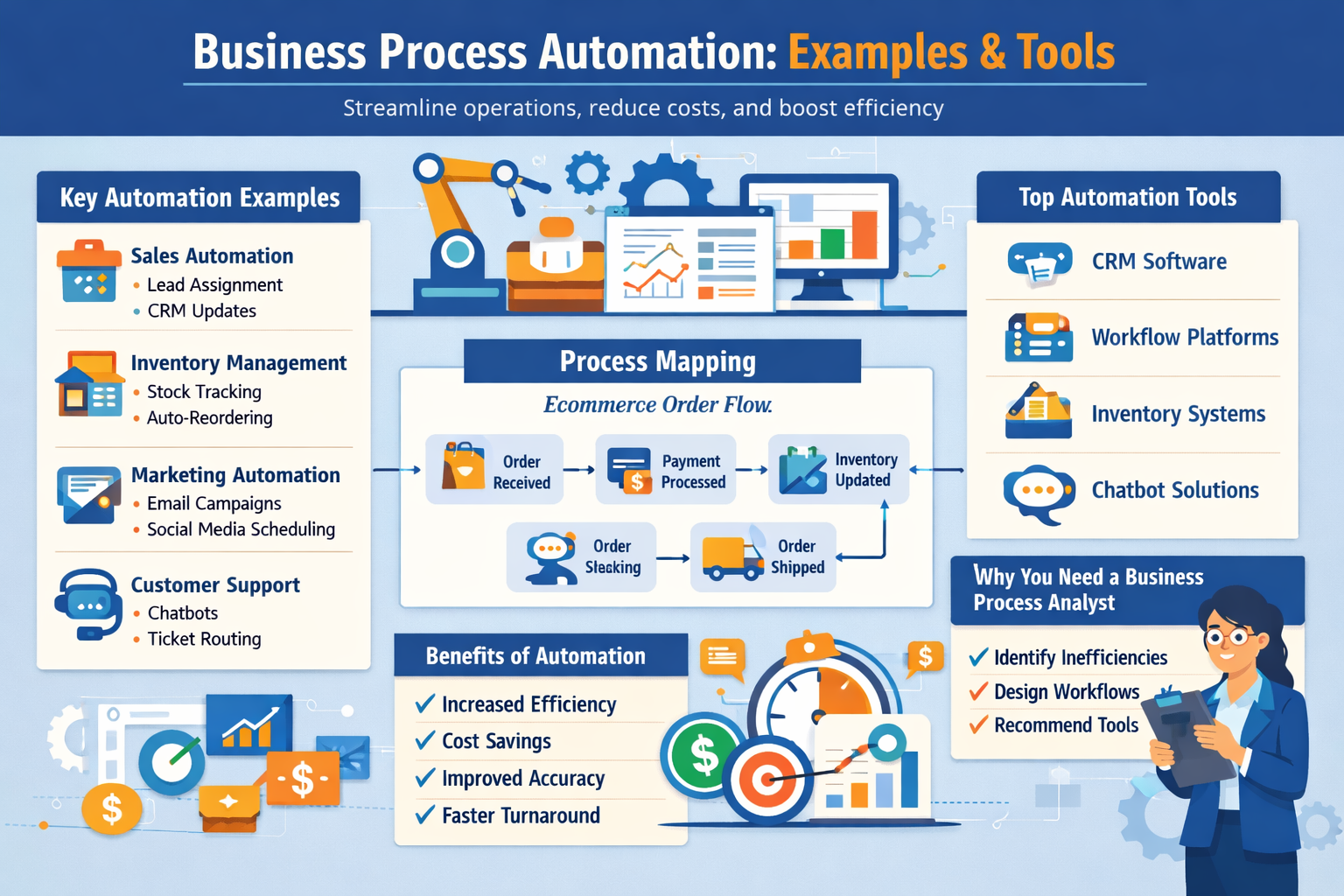
In today’s fast-moving digital world, businesses that rely on manual processes fall behind quickly. That’s why business process automation (BPA) has become essential for improving efficiency, reducing costs, and scaling operations.
In this guide, we’ll explore what business process automation is, real-world examples, and how to implement it effectively.
What Is Business Process Automation?
Business process automation is the use of technology to automate repetitive tasks and workflows within an organization.
Instead of handling tasks manually, businesses use software tools and systems to streamline operations.
What Is Business Process Operations?
Business process operations refer to the day-to-day execution of structured workflows within a company.
These include:
- Sales processes
- Customer onboarding
- Inventory management
- Marketing campaigns
- Financial reporting
Automation improves these operations by reducing human error and saving time.
Business Process Automation Examples
Here are some practical business process automation examples:
1. Sales Workflow Automation
- Automatically assign leads
- Send follow-up emails
- Update CRM systems
2. Inventory Management Systems
- Track stock levels in real-time
- Auto-reorder products
- Generate reports
3. Marketing Automation
- Email campaigns
- Lead nurturing sequences
- Social media scheduling
4. Customer Support Automation
- Chatbots
- Ticket routing
- Auto-responses
Business Process Mapping Examples
Before automating anything, you need to map your processes.
Example:
Ecommerce Order Process
- Customer places order
- Payment is processed
- Inventory is updated
- Order is shipped
- Customer receives confirmation
Mapping helps identify inefficiencies before automation.
Tools to Automate Sales Workflow
Choosing the right tools is key.
Popular data automation tools:
- CRM platforms
- Workflow automation software
- Project management tools
- Integration platforms
Features to look for:
- Easy integrations
- Custom workflows
- Analytics and reporting
- Scalability
Business Process Analyst: Why You Need One
A business process analyst helps organizations:
- Identify inefficiencies
- Design optimized workflows
- Recommend automation tools
- Improve operational efficiency
They play a critical role in successful automation projects.
Ecommerce Website Development Process
Automation also plays a key role in ecommerce website development.
Steps include:
- Planning and strategy
- UI/UX design
- Development
- Testing
- Deployment
- Automation integration (payments, emails, inventory)
Digital Marketing Agency Workflow
A streamlined digital agency workflow often includes:
- Client onboarding automation
- Campaign setup templates
- Reporting dashboards
- Task automation
This reduces manual work and improves client satisfaction.
How to Define Business Processes to Automate
Not every process should be automated.
Focus on:
- Repetitive tasks
- Time-consuming workflows
- Error-prone activities
- High-volume operations
Benefits of Business Process Automation
- Increased efficiency
- Reduced operational costs
- Improved accuracy
- Faster turnaround times
- Better scalability
Final Thoughts
Businesses that invest in automation and systems gain a competitive edge. Whether you’re a startup or an established company, optimizing your workflows can dramatically improve performance.
Start small, automate key processes, and scale from there.