You’ve probably searched for your own business at least once and felt a little sting when a competitor showed up above you. Maybe they had more reviews. Maybe their website looked sharper. Maybe they just seemed more… present online.
That moment right there is when most small business owners start seriously thinking about local digital marketing.
But then comes the confusion. Agencies are everywhere. Prices vary wildly. Everyone promises results, and half of them seem to be speaking a different language. Where do you even start?
What Local Digital Marketing Actually Covers
People often think it’s just social media or running a few ads. It’s a lot more than that.
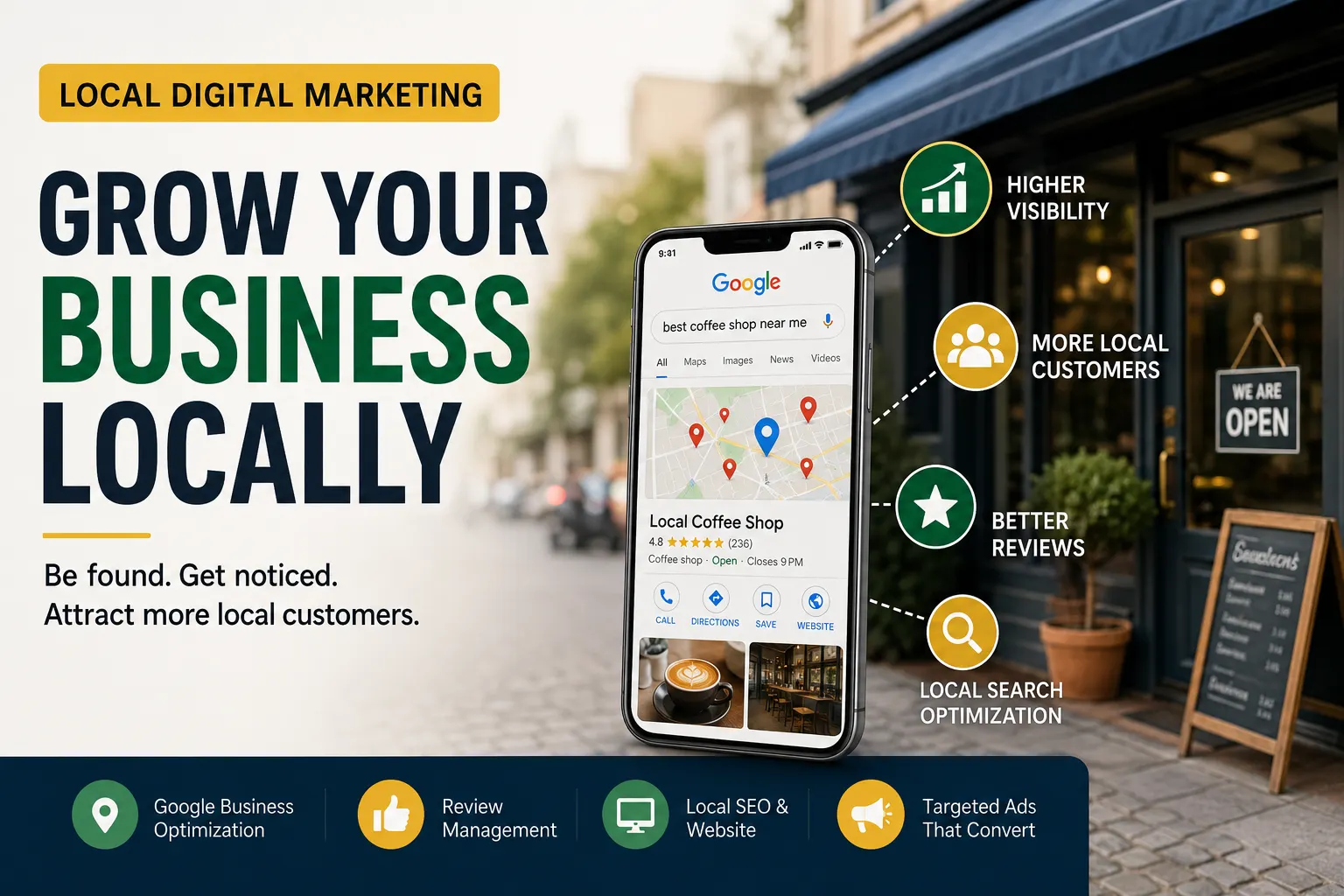
Local digital marketing is the combination of strategies that help a business show up, build trust, and attract customers within a specific geographic area. That includes:
- Google Business Profile optimization
- Local SEO (getting your website to rank in “near me” searches)
- Targeted paid ads on Google or Meta
- Reviews management and reputation building
- Web design and digital marketing working together to convert visitors into leads
That last point is worth slowing down on. A lot of businesses put money into ads or SEO, but their website is doing them no favors. Slow load time, confusing layout, no clear call to action. The traffic shows up and immediately leaves. Your website is part of your marketing, not separate from it.
The Pricing Question Nobody Wants to Ask Out Loud
Digital marketing agency pricing is one of the most confusing parts of this whole space.
You’ll find agencies charging $300 a month and others charging $5,000 for what looks like the same service. So what’s the difference?
Sometimes it’s experience and results. Sometimes it’s just overhead and branding. The honest answer is that pricing alone tells you very little.
What matters more is what’s included, what’s being tracked, and what happens in the first 90 days. Ask any agency you’re considering these three questions:
- What does a typical client look like, and what results have they seen?
- How do you report progress, and how often?
- What does the first month actually involve?
If they can’t answer those clearly, that’s your answer.
For small businesses starting out, affordable digital marketing services don’t mean cheap quality if you know what to look for. A smaller boutique agency or even a skilled freelancer who specializes in local markets can outperform a large agency that treats your account like just another ticket in the queue.
The Rise of Faceless Digital Marketing
Something interesting has been happening over the last couple of years. More service providers, consultants, and even agencies are operating without putting a personal face or brand figure at the front of everything.
Faceless digital marketing has become a real approach, especially for businesses that don’t want to depend on one person’s personality or personal brand to carry the whole operation.
For clients, this can actually be a good thing. You want systems, not just charisma. A team with documented processes will likely serve you better than someone who is great on camera but inconsistent behind the scenes.
That said, trust still matters. Whether you see a face or not, you want to know who you’re working with, how they operate, and who to contact if something goes wrong.
Common Mistakes That Cost Business Owners Time and Money
Expecting fast results from SEO. Local SEO takes time. If someone promises page one rankings in two weeks, walk away.
Running ads before fixing the website. Paid traffic sent to a weak website is just burning money. Get the foundation right first.
Hiring based on price alone. The cheapest option usually means less attention, slower communication, and results that plateau early.
Not tracking anything. If you don’t know where your leads are coming from, you can’t make smart decisions. Basic tracking should be set up from day one.
Treating digital marketing as a one-time fix. It’s an ongoing process. Algorithms change. Competitors catch up. Markets shift. You don’t set it and forget it.
How to Actually Choose the Right Help
This part is where a lot of business owners get stuck. You’re not a marketing expert, so how do you judge whether someone actually knows what they’re doing?
Here’s a simple filter. Look for people or agencies who:
- Can show you real examples or case studies from similar businesses
- Talk about strategy before they talk about tactics
- Ask about your goals and customers before proposing anything
- Have clear, written deliverables so you know what you’re paying for
You don’t need to know everything about digital marketing to make a good decision. You just need to ask the right questions and pay attention to how they respond.
One Real Example That Might Sound Familiar
A local plumbing company had been running the same ad on Facebook for eight months. They were spending about $600 a month and getting maybe two or three calls from it. A friend recommended they look into local SEO and get their Google Business Profile properly set up.
Within four months, they were getting more calls from Google than from the ads, spending less overall, and actually understanding which parts of their marketing were working.
The ads weren’t the problem. The strategy was. They were putting money into something that didn’t match how their customers actually searched for plumbers.
Local digital marketing works best when it’s built around how your specific customers find and choose businesses like yours. That’s the whole point.
If you’ve been putting off figuring this out, you’re not alone. Most small business owners have enough to manage without adding a marketing strategy to the pile. But the longer you wait, the more ground your competitors cover.
Start with one thing. Get your Google Business Profile in order. Ask one agency for a consultation. Read one real case study. Small steps forward are still forward.