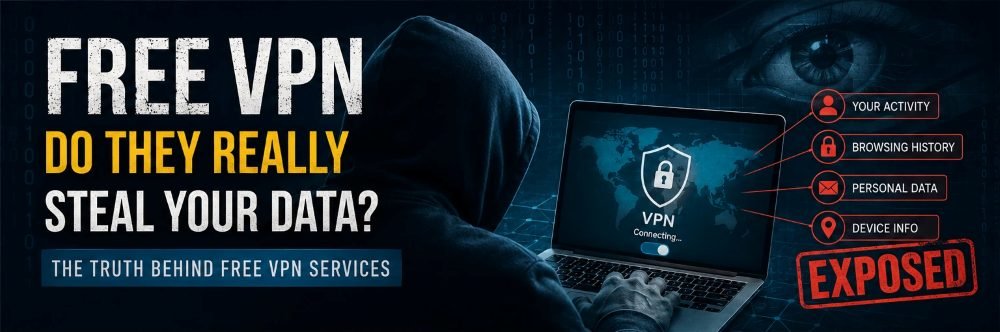
You downloaded a free VPN because you wanted privacy. Makes sense, right? But here’s the thing nobody talks about when they recommend those apps: the VPN itself might be doing exactly what you were trying to avoid.
Not all of them. But enough that it’s worth paying attention.
What Does a Free VPN Actually Cost You?
Running VPN servers is not cheap. You need infrastructure, bandwidth, staff, and maintenance. So when an app offers all of that for zero dollars, you have to wonder, what are they getting out of it?
The honest answer, in most cases, is your data.
Free VPN services have been caught doing things that would shock most users. Some log your browsing activity and sell it to advertisers. Some inject tracking scripts into the pages you visit. A few well-known apps, including ones with millions of downloads, were found sharing user data with third parties, including in some cases, government agencies in countries you probably wouldn’t feel great about.
This is not a rare edge case. A study analyzing hundreds of free VPN apps found that a significant portion contained malware or aggressive data collection built right into the app.
How the Data Collection Actually Works
You open the app, connect to a server, and think your browsing is hidden. But what many free VPNs do is act as a man-in-the-middle between you and the internet.
They can see your traffic. And if they log it, it’s no longer private.
Some apps sell this data to advertising networks. Others use it to build a profile on you, your habits, your location, what sites you visit. A few have even been discovered using users’ devices as exit nodes, essentially using your internet connection to route other people’s traffic through your IP.
One popular free VPN app was found to have routed user bandwidth to a residential proxy network. So you were using it for privacy while your device was quietly doing something else entirely.
Signs a Free VPN Might Be Misusing Your Data
Not every free VPN is malicious, but there are warning signs worth noticing.
- Vague or short privacy policies. If a company cannot explain clearly what they log and what they do with it, that’s a red flag.
- Permissions that don’t make sense. A VPN app asking for access to your contacts or photos is asking for something it has no reason to need.
- No clear business model. If the app is free, has no paid tier, no premium version, and no obvious way to make money, ask yourself what they’re selling.
- Based in a high-risk jurisdiction. Some countries have data-sharing agreements or laws that require companies to hand over user data. A VPN registered in one of those regions may not be able to protect you even if they want to.
What Anonymous Browsing Actually Requires
If you want real anonymous browsing with a VPN, you need a provider that has been independently audited, publishes a transparent no-logs policy, and has a proven track record of not handing over user data when legally pressured.
That almost always means a paid service.
A genuinely secure VPN will have clear documentation about their infrastructure, their logging policies, and what happens if they receive a government request. Some of the better ones have literally had no data to give when subpoenaed, because they don’t store any.
You can find fast VPN options at a reasonable price these days. The difference between a $3 per month plan and a free app is not just speed, it’s trust.
The Free Tier Trap
Some legitimate VPN companies offer a free tier with limited data or servers. That’s different from an entirely free app with no visible business model.
Providers like ProtonVPN offer a free plan that is funded by paid users. They have a clear reason to maintain user trust. That’s a meaningful distinction compared to an anonymous app uploaded to an app store with no company behind it.
If you genuinely need a free option, look for one backed by a company with a paid product. At least their reputation is on the line.
(For people building online income or remote work setups where privacy matters, VPN usage often overlaps with guides like Freelancing in 2026: How to Start and Get Your First Clients Fast)
Is It Ever Safe to Use a Free VPN?
For low-stakes use, like accessing a geo-restricted YouTube video at home, some free VPNs are probably fine. The risk scales with what you’re doing.
But if you’re using a VPN to protect sensitive activity, work remotely, access financial accounts on public Wi-Fi, or anything where your data actually matters, a free VPN is a gamble you probably shouldn’t take.
The irony of it is real. You use a free VPN proxy to hide from one risk and end up handing your data directly to another.
Privacy is not free to provide. If someone is providing it for free, it’s worth asking what they’re getting in return.